
Why fall prevention deserves daily attention
Falls are not an unavoidable part of aging. Many can be prevented by reducing hazards, supporting strength and balance, reviewing medications, and responding quickly to changes in mobility or health.
For residents of assisted living in Washington, PA, safety depends on more than keeping floors clear. A person may fall because of dizziness, poor lighting, vision changes, weakness, rushing to the bathroom, unsuitable footwear, or an unfamiliar surface. Effective prevention looks at the entire routine rather than focusing on a single hazard.
Pennsylvania assisted living regulations also address fall and accident prevention. A safe residence should have procedures for identifying risks, responding to incidents, and protecting residents whose health or mobility needs have changed.
What are the most common fall hazards?
The most common hazards are often ordinary objects or routines that become risky when balance, vision, or reaction time changes.
Watch for:
- Loose throw rugs, curled mat edges, and unsecured floor coverings
- Electrical cords or oxygen tubing crossing walking paths
- Clutter near beds, chairs, hallways, or bathroom entrances
- Wet floors, spilled liquids, or recently cleaned surfaces
- Dim lighting, glare, and shadows that make changes in floor level difficult to see
- Furniture that shifts when used for support
- Shoes or slippers with smooth, worn, or loose soles
- Clothing that drags near the feet
- Items stored too high or too low, requiring reaching, bending, or climbing
- Unfamiliar equipment, room layouts, or walking routes
A fall-risk review should include the resident’s room, bathroom, common areas, dining spaces, elevators, outdoor walkways, and transportation loading areas.
How can an assisted living room be made safer?
A safer room allows a resident to move from the bed to the bathroom, chair, and doorway without rushing or reaching for unstable furniture.
Keep a clear path between frequently used areas. A night-light or motion-activated light can help with nighttime trips to the bathroom. Light switches, telephones, personal alarms, water, and commonly used items should be easy to reach from the bed or chair.
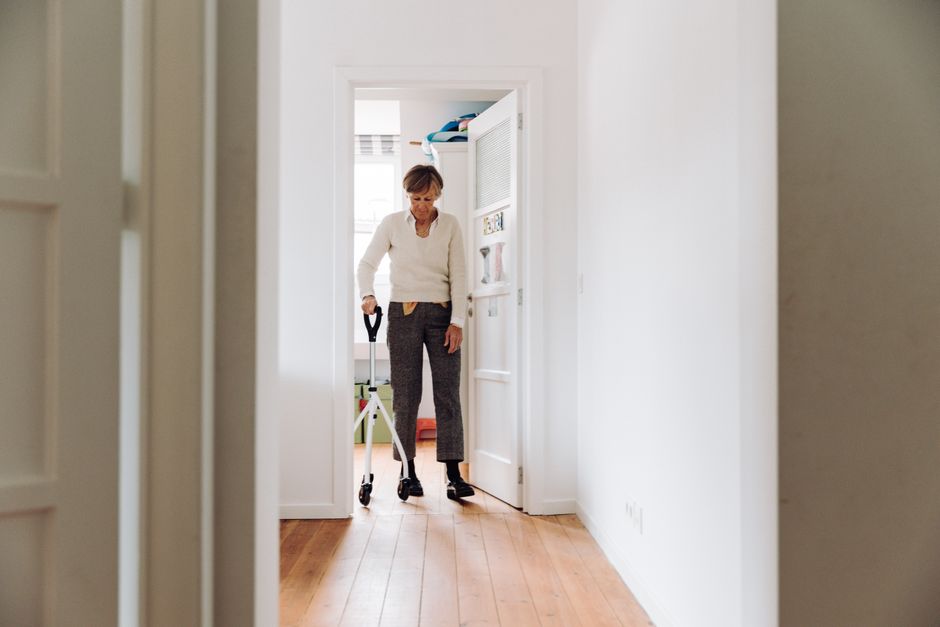
The bed and chair should be at a height that allows the resident to stand without excessive effort. Wheels should be locked when appropriate. A walker or cane should remain within safe reach, but it should not be positioned where a resident must twist or lean dangerously to grab it.
Bathroom safety deserves special attention. Slippery surfaces, low toilets, wet floors, and difficult-to-reach controls can create problems even for someone who walks well during the day. Grab bars, properly positioned handholds, shower seating, nonslip surfaces, and adequate lighting may reduce risk. Equipment should be installed and maintained correctly rather than improvised with towel racks or lightweight furniture.
What role do medications and health conditions play?
Dizziness, sleepiness, low blood pressure, blurred vision, and confusion can increase fall risk. These effects may come from prescription medicines, over-the-counter products, or combinations of medicines.
A medication review should be requested whenever a resident begins falling, feels unsteady, becomes unusually drowsy, or reports dizziness after standing. Medicines should not be stopped or changed without medical guidance. The review should include sleep aids, blood pressure medicines, anxiety medicines, pain medicines, allergy products, and nonprescription supplements.
Health conditions can also affect walking safety. Arthritis, Parkinson’s disease, stroke, diabetes, neuropathy, hearing loss, urinary urgency, and heart problems may change how a person moves or reacts. A new limp, shuffling gait, weakness, repeated stumbling, or reluctance to walk deserves prompt attention.
How do strength, balance, and vision help prevent falls?
Regular activity that improves leg strength, balance, and coordination can make everyday movements safer. Appropriate exercises may include supervised standing practice, seated leg strengthening, balance activities, walking, or other routines recommended for the resident’s abilities.
Exercise should match the person’s health status. Someone who has recently fallen, feels faint, or has significant weakness should receive individualized guidance before beginning a new routine.
Vision checks are also important. Changes in depth perception, cataracts, glare sensitivity, or an outdated prescription can make steps, floor transitions, and obstacles harder to see. Glasses should be clean and used as directed. Bifocals may require extra caution on stairs or uneven ground because looking downward through the wrong portion of the lens can affect depth judgment.
What should residents and families know about footwear?
Sturdy, well-fitting footwear is safer than loose slippers, socks alone, backless shoes, or smooth-soled footwear. Shoes should stay securely on the foot and provide traction without being excessively thick or unstable.
Residents should avoid walking in socks on smooth floors unless the socks are specifically designed with slip-resistant material. Footwear should also be checked for worn soles, stretched openings, and poor heel support.
Comfort matters, but a comfortable shoe is not necessarily a safe shoe if it slips, folds, or changes the way the foot contacts the floor.
How can seasonal weather affect safety in Washington?
Winter conditions can create fall hazards before a resident even enters a building. Snow, freezing rain, slush, wet floors, and refreezing meltwater may affect entrances, ramps, sidewalks, and parking areas. Residents may also be tempted to rush across a slippery surface or carry packages while using a cane or walker.
Seasonal precautions include:
- Placing absorbent mats inside entrances and keeping them flat
- Marking wet areas until floors are dry
- Clearing snow and ice from walking routes
- Using adequate outdoor lighting during shorter winter days
- Allowing extra time for travel rather than rushing
- Keeping mobility devices clear of packed snow and ice
- Using footwear suited to cold, wet conditions
- Asking for assistance with difficult outdoor routes instead of attempting them alone
Rainy autumn weather and spring mud can create similar problems around entrances and uneven outdoor surfaces.
What should happen after a fall?
A fall should be reported even if the person says there is no injury. Pain, bruising, weakness, confusion, or reduced activity may appear later. A fall can also signal a change in medication effects, blood pressure, balance, vision, or general health.
After a fall, the person should not be hurried to stand. Staff or another trained helper should assess the situation and follow the residence’s response procedures. Emergency evaluation may be needed for severe pain, head impact, loss of consciousness, bleeding, deformity, inability to bear weight, sudden confusion, or use of blood-thinning medication.
A fall review should ask what happened immediately beforehand. Was the resident turning, reaching, standing from bed, hurrying to the bathroom, wearing different footwear, or walking on a wet surface? Identifying the cause helps prevent a repeat event.
How can families support a safer routine?
Families can help by sharing information about previous falls, changes in walking, fear of falling, nighttime habits, and past injuries. They can also help keep clothing, footwear, glasses, and mobility aids in good condition.
A resident should feel comfortable reporting near-falls and dizziness. A near-fall is useful warning information, not something to dismiss. Staff can then review the environment and determine whether the resident’s care plan, equipment, activity level, or medical follow-up needs to change.
Fall prevention works best as an ongoing process. Rooms, routines, medications, and abilities can change, so safety checks should be repeated after an illness, hospitalization, injury, medication change, or noticeable decline in balance.
